

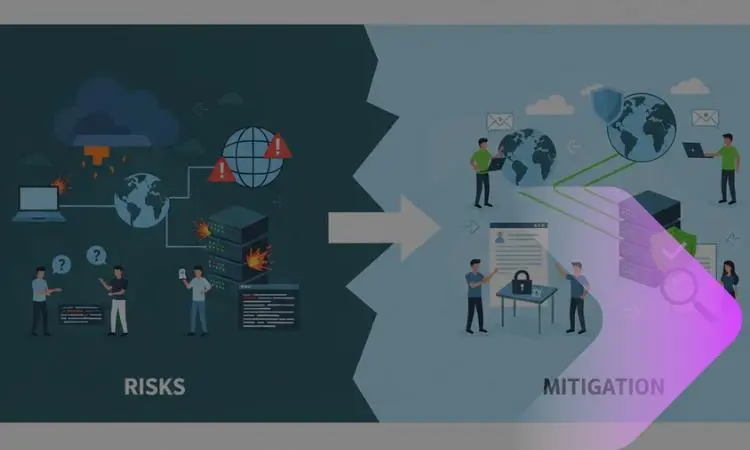
In today’s hyper-competitive digital economy, companies seeking scalable engineering capabilities often evaluate offshore models. At Talently, we have worked closely with global organizations that initially considered traditional offshore IT outsourcing, only to realize that strategic alternatives such as Nearshore IT partnerships in LATAM provide stronger alignment, visibility, and performance. Understanding the risks of offshore IT outsourcing is essential before committing critical systems, infrastructure, and product development to remote teams operating across distant geographies.
Below, we break down the most pressing risks and present concrete, actionable mitigation strategies to safeguard operational continuity, intellectual property, and long-term growth.
1. Communication barriers and cultural misalignment
One of the most underestimated risks in offshore IT outsourcing is communication breakdown. Time zone differences of 8–12 hours can delay feedback loops, extend sprint cycles, and disrupt agile workflows. Language nuances, cultural expectations, and varying business etiquette can further complicate collaboration.
Misaligned communication often results in:
- Misinterpreted technical requirements
- Scope creep
- Delayed releases
- Reduced product quality
How we mitigate communication risk
We implement structured communication frameworks that include:
- Overlapping work hours for daily standups
- Documented sprint planning and retrospective summaries
- Clear escalation protocols
- Cultural onboarding for both client and vendor teams
However, proximity matters. Choosing a Nearshore IT model in LATAM reduces time zone friction to just 1–3 hours difference for U.S.-based companies, allowing real-time collaboration without overnight delays.
2. Reduced visibility and lack of operational control
Offshore outsourcing frequently creates a visibility gap. When development teams operate in distant regions with limited transparency, decision-makers may struggle to track performance metrics, code quality, and sprint velocity.
Common control issues include:
- Inconsistent reporting standards
- Limited access to project management tools
- Fragmented accountability
- Vendor lock-in
How we restore operational transparency
To mitigate this, we enforce:
- Shared dashboards (Jira, Asana, Linear)
- Weekly KPI tracking (velocity, defect rate, deployment frequency)
- Git repository access and code reviews
- SLA-backed contractual frameworks
More importantly, nearshore partnerships allow leadership teams to build stronger working relationships. Face-to-face meetings become feasible, strengthening governance structures and trust.
3. Data security and intellectual property risks
Entrusting proprietary code, product roadmaps, and customer data to offshore vendors can expose organizations to cybersecurity vulnerabilities and IP theft.
Key concerns include:
- Weak regulatory enforcement
- Non-compliant data storage practices
- Inadequate encryption standards
- Insufficient access controls
How we strengthen data protection
Mitigation requires a multilayered approach:
- NDA and IP protection clauses aligned with U.S. legal standards
- SOC 2 and ISO compliance validation
- Zero-trust security architecture
- Encrypted VPN access and endpoint monitoring
- Role-based access control (RBAC)
Selecting partners in LATAM jurisdictions with strong commercial ties to the U.S. significantly reduces regulatory ambiguity compared to certain offshore markets.
4. Hidden costs and budget overruns
While offshore IT outsourcing often appears cost-effective on paper, hidden expenses frequently surface:
- Extended onboarding time
- Rework due to misalignment
- Management overhead
- Quality assurance corrections
- Compliance audits
These indirect costs dilute the perceived savings and create operational drag.
How we maintain predictable cost structures
We adopt:
- Transparent pricing models
- Clearly defined sprint deliverables
- Performance-based milestones
- Defined acceptance criteria
Nearshore IT models also reduce coordination overhead, resulting in faster product-market alignment and more efficient burn rates.
5. Quality assurance and technical standards gaps
Offshore vendors may operate under different engineering standards, documentation practices, or testing methodologies. This creates inconsistency in code quality and scalability.
Risks include:
- Technical debt accumulation
- Inadequate testing coverage
- Poor DevOps practices
- Infrastructure instability
How We Ensure Engineering Excellence
We standardize:
- Code review policies
- Automated CI/CD pipelines
- Unit and integration testing benchmarks
- DevOps documentation standards
- Cloud architecture validation
Access to highly vetted Nearshore Tech Talent in LATAM ensures alignment with U.S.-based technical frameworks, agile methodologies, and product management expectations.
6. Talent turnover and knowledge loss
Offshore outsourcing providers often experience high developer turnover. When engineers leave mid-project, institutional knowledge disappears, increasing ramp-up time for replacements.
This risk manifests as:
- Delayed product timelines
- Disrupted sprint cycles
- Increased onboarding cost
- Inconsistent architectural decisions
How we minimize turnover risk
We prioritize:
- Direct talent engagement rather than anonymous outsourcing pools
- Competitive compensation aligned with global standards
- Long-term contract structures
- Dedicated team retention strategies
Nearshore ecosystems in LATAM have shown growing stability, particularly when engineers are embedded within product teams rather than outsourced as interchangeable resources.
7. Geopolitical and regulatory instability
Political instability, regulatory changes, and currency fluctuations can impact offshore operations. Sudden policy shifts may disrupt service continuity or affect contractual enforceability.
How we reduce geopolitical exposure
We diversify:
- Talent sourcing across multiple LATAM countries
- Payment structures in stable currencies
- Compliance with international legal frameworks
By partnering with nearshore markets that maintain strong economic relationships with the United States, risk exposure is significantly minimized.
Why Nearshore is the strategic alternative to Offshore
Traditional offshore IT outsourcing may deliver short-term cost reductions, but the cumulative impact of communication delays, quality risks, and hidden overhead frequently outweighs initial savings.
By contrast, a structured Nearshore IT approach provides:
- Time zone alignment
- Cultural compatibility
- Higher transparency
- Faster iteration cycles
- Improved engineering collaboration
Companies leveraging LATAM tech ecosystems gain access to highly skilled developers proficient in modern stacks including React, Node.js, Python, AWS, and DevOps automation frameworks — without sacrificing operational agility.
A Framework for Risk-Free IT Outsourcing
We recommend a structured decision framework:
- Conduct vendor due diligence
- Validate security certifications
- Test communication protocols with pilot sprints
- Implement KPI-based reporting
- Align contractual SLAs with business objectives
- Prioritize nearshore alignment where feasible
Organizations that apply this structured mitigation model consistently outperform competitors relying solely on low-cost offshore providers.
Build resilient engineering teams with Talently
At Talently, we believe that mitigating the risks of offshore IT outsourcing requires more than vendor selection — it requires strategic alignment. By focusing on Nearshore Tech Talent in LATAM, companies gain real-time collaboration, cultural compatibility, engineering excellence, and stronger operational control.
If your organization is evaluating offshore IT outsourcing and seeking a more reliable alternative, explore our approach to Nearshore IT solutions in LATAM. Build scalable, high-performance engineering teams without sacrificing transparency or security.
The future of resilient product development lies in strategic proximity, not distance.