

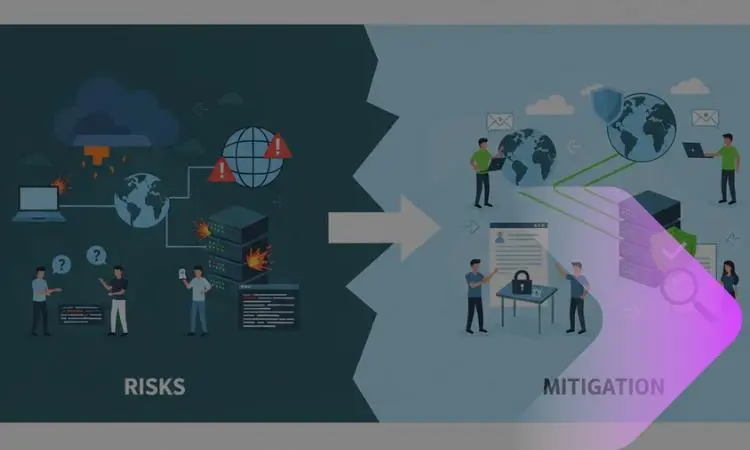
Hiring for a regulated fintech isn’t a harder version of hiring for SaaS. The bar moves from “can this person ship” to “will their access, laptop, and paper trail survive a SOC 2 Type II audit, and will they be awake when the settlement file breaks at 4:30 p.m. ET.” Most hiring processes were never built to answer that.
TL;DR
- Compliance frameworks don’t tell you who to hire. They dictate what evidence you produce about everyone touching production, which turns onboarding and offboarding into audited artifacts.
- PCI DSS 12.7 requires screening personnel before granting cardholder-data access; Req. 7 and 8 force least privilege, unique IDs, and MFA. Shared logins are audit findings, not shortcuts.
- SOC 2 Type II tests controls across a period (commonly 3-12 months). One contractor added without documented approval becomes an exception in the report your customers read.
- The hard roles: ledger/payments backend, data platform for reconciliation and regulatory reporting, risk/fraud ML, and platform/security engineering.
- Interview for correctness: idempotency, double-entry design, at-least-once delivery, reconciliation breaks, money as integers.
- Timezone overlap is a hard requirement because incident clocks, audit deadlines, and payment-network cutoffs are all clock-bound. Fedwire doesn’t wait for a 13-hour lag.
What regulation actually changes about hiring
No framework says “don’t use contractors” or “hire only US citizens.” They say you must define controls and then prove you followed them for every person in scope. That moves the cost from the interview to the operational record.
Three concrete effects. Screening comes before access: PCI DSS 12.7 requires screening personnel with cardholder-data-environment access prior to hire, within local law. If your SOC 2 control says “background checks are performed on all personnel, including contractors,” the auditor samples your contractor roster and tests it. Your staffing partner’s process is now your control. Access is provisioned by role and reviewed on a schedule: quarterly reviews with named approvers, unique credentials, MFA on anything touching production. Contractor records must exist: signed agreements, an access-grant ticket, and a same-day revocation record.
On data residency, be precise instead of superstitious. There’s no blanket US federal prohibition on non-US engineers accessing cardholder data or customer PII. The constraints come from your sponsor bank or processor agreements, customers’ vendor security reviews, state privacy law, and your own policy. Decide the rule before sourcing and put it in the vendor contract.
Compliance obligation to hiring requirement
| Obligation | What it requires | What it changes in hiring / vendor terms |
|---|---|---|
| SOC 2 Type II (CC6 access) | Controls operating effectively over a period, auditor-sampled | Documented access approval per engineer; quarterly reviews; 24-hour offboarding |
| PCI DSS Req. 7 & 8 | Least privilege, unique IDs, no shared accounts, MFA | Named accounts only for contractors; role-scoped from day one |
| PCI DSS Req. 12.7 | Screening personnel with CDE access prior to hire | Partner runs and evidences in-country background checks; you retain the attestation |
| PCI DSS Req. 12.8 | Written third-party agreements, due diligence, responsibility matrix (12.8.5) | Security exhibits in the MSA, not a generic contractor agreement |
| BSA/AML, CIP/KYC | Program controls, 5-year recordkeeping, SAR confidentiality | Need-to-know access to monitoring and SAR tooling; tighter screening and logging |
| GLBA Safeguards Rule | Service-provider oversight and contractual security terms | Vendor security review of the staffing firm itself, not just the individual |
| Endpoint policy | Encryption, EDR, patching, MDM | Company-issued or MDM-enrolled laptops; “their own machine” isn’t an answer |
| Incident notification (e.g., NYDFS Part 500: 72 hours) | Clock-bound reporting after determination | Staffed US-hours coverage; named on-call with contact records |
The roles fintechs actually need
Four archetypes cover most demand, and none are the full-stack product engineer generalist recruiters send.
Ledger and payments backend. Owns the ledger, payment orchestration, retries, webhooks, and processor/network/bank integrations. The scarce skill isn’t the language. It’s having personally debugged a settlement mismatch.
Data platform and analytics engineering. Builds reconciliation pipelines, regulatory reporting, and warehouse models finance and compliance actually trust. Closer to accounting than to dashboards: completeness, lineage, restatements, audit trails.
Risk and fraud ML. Point-in-time-correct feature stores, model monitoring, and explainability, because model-risk and adverse-action expectations mean “the model said so” isn’t defensible.
Platform and security engineering. IAM, secrets, logging, evidence automation. Turns “we do access reviews” into an export the auditor accepts without a follow-up email.
| Role | Approx. 2026 LATAM nearshore rate (USD/hr) |
|---|---|
| Senior ledger/payments backend | $55-$85 |
| Senior data/analytics engineer | $50-$75 |
| Risk/fraud ML engineer | $60-$90 |
| Platform/security engineer | $60-$95 |
| Staff-level in any of the above | +20-30% over senior |
Market ranges, not quotes; country, English level, and compliance exposure move them.
How to interview for correctness-critical work
Algorithm screens tell you nothing about whether someone can be trusted with money movement. Replace one round with a ledger design conversation and grade the failure modes.
- Money representation. If the answer is a float, end the round. You want minor-unit integers or an exact decimal type, plus explicit currency and rounding policy.
- Idempotency. “The client retries
POST /paymentsafter a timeout. What prevents a double charge?” Look for client-supplied idempotency keys, a database-level uniqueness constraint, and a stored response, not an application-layer existence check with a race in it. - Delivery semantics. Exactly-once end-to-end delivery doesn’t exist in practice; the right answer is at-least-once delivery plus idempotent consumers and a dedupe window.
- Double-entry design. Immutable append-only postings, balances derived from entries rather than mutated in place, and a clear line between a reversal and a correction.
- Reconciliation breaks. “The processor file shows 12,431 settled transactions; your ledger shows 12,429. Walk me through the first hour.” You’re grading investigative discipline and whether they instinctively protect the audit trail.
- Access instincts. “You need production data to debug a customer issue.” Anyone who reaches for a live PII read without mentioning approval, masking, or logging is a liability.
Why timezone overlap is a hard requirement
Elsewhere an eight-hour lag costs a day of iteration. In fintech it costs a deadline someone external set. Payment rails are clock-bound: same-day ACH’s final submission window closes in the late afternoon Eastern, Fedwire closes in the early evening Eastern with an earlier cutoff for third-party transfers, and card clearing files ship on the network’s schedule. A failed file at 4:15 p.m. ET needs an engineer now, not at the start of someone’s tomorrow.
The compliance calendar works the same way. Incident notification clocks (72 hours under NYDFS Part 500 for covered entities, plus contractual windows with customers) start at determination, and determination requires engineers in the room. Auditor requests arrive with short fuses, and release freezes around month-end close compress deployments into narrow US-hours slots. Four to eight hours of same-day overlap with US Eastern makes on-call, cutoff coverage, and audit responsiveness work without night-shift premiums.
The checklist to hand your staffing partner
Send this before the first resume, not after the offer.
- Screening: in-country background check completed prior to start, with a written attestation you can retain.
- Agreements: signed NDA, IP assignment, and acceptable-use policy per person, plus a security exhibit and responsibility matrix in the MSA.
- Devices: company-issued or MDM-enrolled endpoints with full-disk encryption, EDR, screen lock, and enforced patching.
- Access: named accounts only, SSO with MFA, role-scoped by default, production access via ticketed approval.
- Offboarding: access revoked within 24 hours of the last day; written same-day notice of any roster change.
- Records: on request, a roster with start dates, roles, screening status, and access levels. Your auditor will ask.
- Coverage: contractual overlap hours with US Eastern, on-call participation, and escalation contacts.
- Data handling: written statement of where data may be accessed and stored, aligned to your bank and customer commitments.
Frequently Asked Questions
Can nearshore contractors work on systems in PCI scope?
There's no general legal prohibition, but they must meet the same requirements as employees: screening before access under Req. 12.7, unique IDs and MFA under Req. 8, least privilege under Req. 7, and a written agreement with a responsibility matrix under 12.8. The practical constraint is usually contractual: your processor, sponsor bank, or customers may impose limits.
Does using contractors hurt a SOC 2 Type II report?
Not inherently. What hurts is inconsistency: access granted before screening finished, a shared login, an offboarding that took three weeks. Type II samples the whole period, so one sloppy month produces an exception. Treat contractors exactly like employees in your access and evidence workflow.
How much overlap with US hours is enough?
Aim for at least four hours of daily overlap with US Eastern, more if the engineer joins the on-call rotation. Most LATAM countries sit within one to three hours of Eastern, so a normal local schedule yields six or more hours without night shifts. Write the hours into the contract.
What should I pay for a nearshore payments engineer in 2026?
Approximate ranges are $55-$85 per hour for a senior ledger/payments backend engineer in LATAM, with staff-level roles 20-30% higher and specialized risk/fraud ML at the top of the band. Compliance-heavy platform and security roles price similarly. These are market ranges, not guarantees.
Do I need prior fintech experience, or can a strong generalist learn it?
Generalists can learn payment rails, but you want at least one person who has already lived through a reconciliation break, a chargeback flow, or a ledger migration. Domain scars matter more than framework familiarity. Hire experience for the ledger surface and general strength around it.